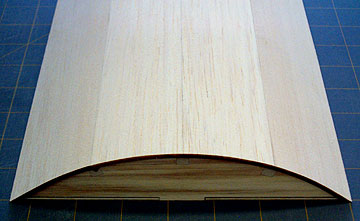
Preparation
What I've learned is that success in making a balsa skin, like so many other model building tasks,
is a matter of preparation more than anything else.
The first thing you should do is gather wood having the appropriate weight, grain and thickness for the skin. Sheet
wood can add a lot of weight to your model in a hurry. Generally
speaking the
sheets you choose should be the lightest, straight-grained (A-grain) balsa in your
stock. A skin adds a lot of strength to the model as well.
Contest balsa is perfectly acceptable in most cases.
Matching Sheet Thickness
The biggest problem I had was that the actual thickness of balsa sheets varies enough that the edges sometimes have an
extremely poor match.
Until I started paying more attention to this I had to do too much sanding
which caused low spots and other imperfections. The less
you have to sand the skin to level the joints and smooth it the
better it will be.
If you actually check your balsa stock you will find that that many balsa sheets
taper slightly across the sheet. This is something that happens at the mill. That
doesn't mean the wood should be discarded. You can use it for
components other than skins.
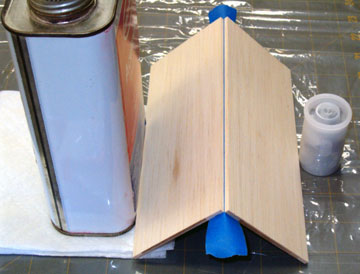
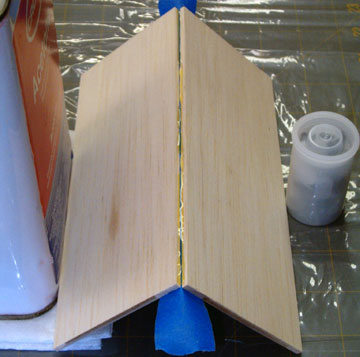
To determine if a sheet is acceptable check both of its edges against
both edges of another sheet. If any edge doesn't match then one or
both of the sheets should not be used. Select a third sheet and check
both sheets against it in the same manner. Continue doing this until
you have enough sheets to make the skin that match reasonably well.
By the time you have selected your sheets, the thickness of both edges of
any given sheet should match the thickness of both edges of every other
sheet for the same skin. When you have enough sheets to make the skin that match within reason put
them aside and repeat the above steps to select sheets for the rest of the
skins. A typical wing may need 4 skins, for example.
Ideally all edges of all sheets should match all skins used for matching
components. In other words, if you're making wing skins then all the
sheets for the upper skin should also match all the sheets for the lower
skin, but that may be asking too much.
The next thing you should do is weigh each stack of sheets so they can be
matched to help balance the wing. If you selected the wood properly
the skins should be fairly closely matched in weight.
It's up to you how anal-retentive you want to be about all of this.
I match each skin and then weigh the stacks. If they're close then I
move on. If not then I mix and match sheets until the stacks are close
to the same weight. Now I check thicknesses again. If they match
then I move on. if they don't match then I work on something else for
a while and come back to it later.
|